- Roof area in squares
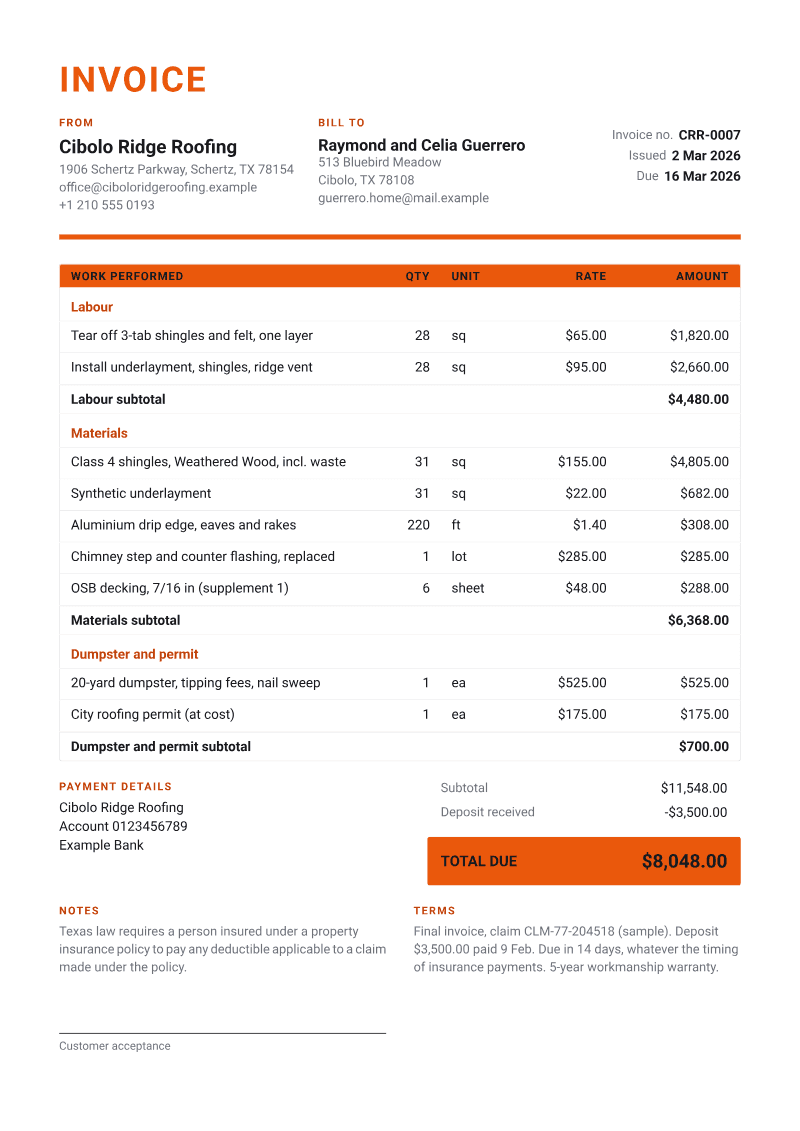
- Tear-off, materials and labour are all priced per square, so the measured area is the number every other line depends on. State the roof area and, separately, the material quantity including waste, or the adjuster will ask why you bought 31 squares for a 28-square roof.
- Example: 28 squares measured; 31 squares of shingles including waste
- Pitch and storeys
- Steep or high roofs take longer and need more safety equipment, which is why many roofers add a per-square charge above a certain pitch. Printing the pitch lets the owner and insurer see the reason for any steep-roof line.
- Example: 7/12 pitch, single storey
- Insurance claim number and supplements
- On a storm job the owner often forwards your invoice to the insurer. The claim number lets the adjuster file it, and naming each approved supplement (decking, flashing, code items) ties the extra lines to approvals already on record.
- Example: Claim CLM-77-204518; supplement 1: 6 sheets of decking
- Product and warranty details
- Shingle line, impact class and colour are what the owner needs to match a repair years later, and what the insurer will ask about on the next claim. Note who registered the manufacturer warranty and how long your workmanship warranty runs.
- Example: Class 4 architectural, Weathered Wood; 5-year workmanship
- Deposit and payment record
- Large roofs are commonly billed as a deposit and a final invoice. Showing the deposit as a credit on the final invoice, with its date, keeps the full job value visible while the balance is what the owner pays now.
- Example: Deposit $3,500.00 paid 9 Feb; balance $8,048.00